


Ingredients
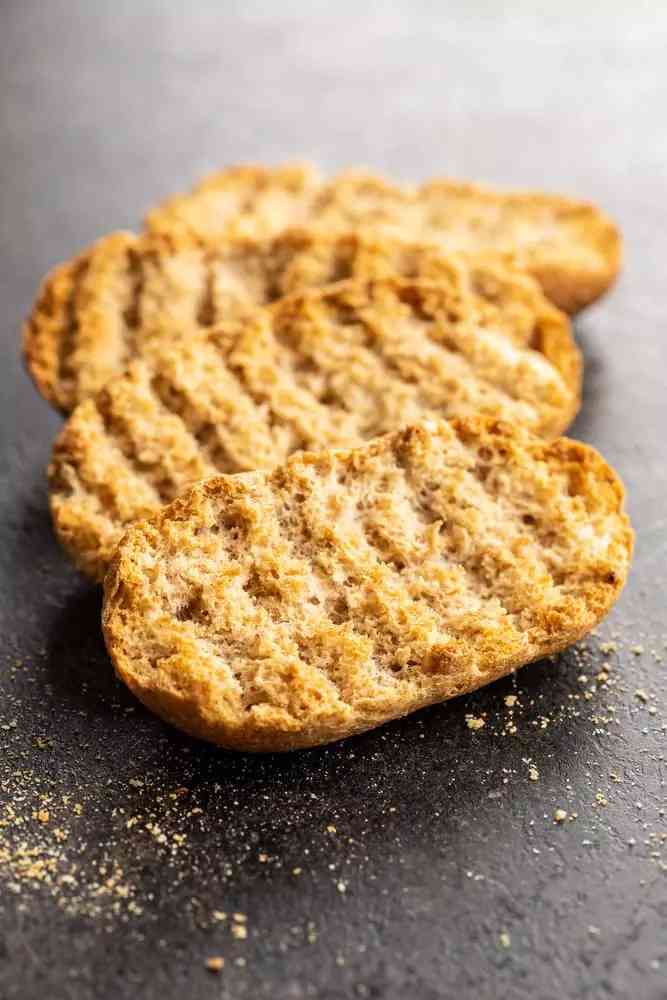
- 1.3 kg sliced Bread
Instructions
- Stale bread works better here than fresh. A day-old loaf has already given up some of its water, so it goes brittle sooner and the crumb breaks cleanly instead of squashing under the knife.
- Use whatever bread you have, but keep one kind to a tray. A dense sourdough and a soft sandwich loaf will not finish together, and the batch is only done when the slowest slice is.
- Lay the slices flat with a finger of space around each one. Bread is thick enough that the air has to reach both faces, and slices that touch stay pale and soft where they meet.
- Dry at 52 °C for 4 hours. Snap a slice from the middle of a tray once the time is up: it should break with a sharp crack and no give at the centre, and the torn edge should look the same all the way through.
- Any slice that bends rather than snaps goes back on. The centre is where the water hides, so test a thick slice rather than a corner one.
- Bring the slices to room temperature on a rack before you crush them. Bread coming out of the machine feels crisper than it is, and warm crumbs packed into a jar will go soft overnight.
- Break the slices by hand for coarse crumbs, or pulse them in a food processor for fine ones. Coarse suits a crust or a stuffing; fine is what you want for coating.
- Keep the crumbs in a sealed jar in the cupboard and they hold for six months. If the loaf had seeds or oil in it, use them within a month instead — it is the oil that goes rancid, not the crumb.
Nutrition
| Per 100 g | Per 1 oz (28 g) | |
|---|---|---|
| Energy | 397 kcal | 113 kcal |
| Protein | 13.4 g | 3.8 g |
| Fat | 4.9 g | 1.4 g |
| saturated | 1 g | 0.3 g |
| Carbohydrate | 68.7 g | 19.5 g |
| sugars | 7.5 g | 2.1 g |
| Fibre | 4 g | 1.1 g |
| Sodium | 732 mg | 207 mg |
Estimated from the ingredients, for the finished dried product. Actual values vary with the produce you use and how far you dry it.


