


Nutrition
| Per 100 g | Per 1 oz (28 g) | |
|---|---|---|
| Energy | 301 kcal | 85 kcal |
| Protein | 12.7 g | 3.6 g |
| Fat | 3.3 g | 0.9 g |
| saturated | 0.5 g | 0.1 g |
| Carbohydrate | 48.9 g | 13.9 g |
| sugars | 39.6 g | 11.2 g |
| Fibre | 16 g | 4.5 g |
| Sodium | 844 mg | 239 mg |
Estimated from the ingredients, for the finished dried product. Actual values vary with the produce you use and how far you dry it.
Ingredients
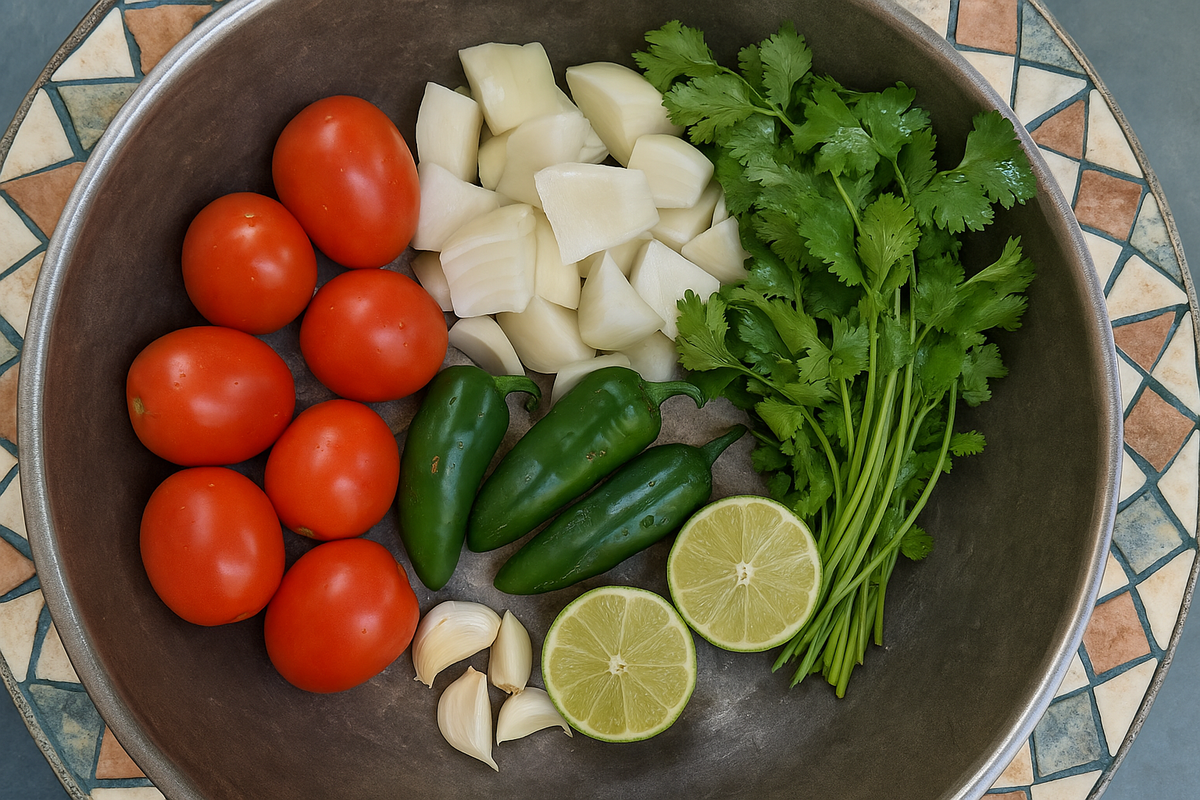
- 1.6 kg ripe tomatoes, cored
- 256 grams onions, roughly chopped
- 128 grams jalapenos or other green chillies, stems removed
- 4 cloves garlic
- 1 large bunch fresh coriander
- 1 1/4 teaspoons ground cumin
- 5/8 teaspoon salt
- 58 millilitres lime juice
Instructions
- Blend the tomatoes, onions, chillies and garlic to a smooth purée. Leave the seeds in the chillies for heat or take them out for none — this is the only decision in the recipe that cannot be corrected later, because you cannot make a dried salsa milder.
- Simmer the purée in a wide pan for about 30 minutes, uncovered, stirring now and then. This is not optional. Raw salsa is mostly water sitting between solids, and a pan takes that water out in half an hour where a dehydrator would spend half a day on it.
- Stir in the cumin, the salt and the lime juice, then blend again until there is no texture left at all. Chunks are what ruin a dried salsa: a piece of onion still soft when the rest of the sheet is brittle is the piece that spoils the jar.
- Go light on the salt and taste it knowing that. Drying takes about nine tenths of the weight out and leaves every grain of salt behind, so a salsa seasoned properly while wet comes out roughly ten times as salty. One teaspoon across this whole batch is deliberate. Season the dish you rehydrate it into, not the leather.
- Line the trays with solid sheets — fruit-leather inserts, or baking paper cut to fit. Spread the purée 5 mm thick and leave a finger-width margin at the edge, because the edges dry first and a thin edge burns while the middle is still wet.
- Dry at 60 °C for 8 hours. Rotate the trays after the first few hours. Once the sheet has set enough to lift in one piece, peel it off the liner and turn it over — the underside is against plastic and dries last.
- It is done when there is no tack anywhere on either side and a corner snaps instead of bending. Check the middle of each sheet rather than the edge. A salsa leather that is nearly dry looks exactly like one that is dry.
- Let the sheets cool completely on a rack. Warm leather is pliable and feels wetter than it is, and you cannot judge a batch while it is still warm.
- Break the sheets up and grind them, in batches, to flakes or a powder. Flakes rehydrate into something with a bit of body; powder dissolves into sauces and dry rubs. Expect about a tenth of the wet weight back — a full 10-tray load comes off as roughly a large jar.
- Condition it before you trust it: jar it loosely, leave it a week, and shake it every day or two. Any moisture on the glass, or any clumping that does not break up, means it goes back on the trays.
- To use it, stir in an equal volume of boiling water and leave it five minutes. It comes back as salsa, and it goes into a backpacking meal at a tenth of the weight it left as.


