


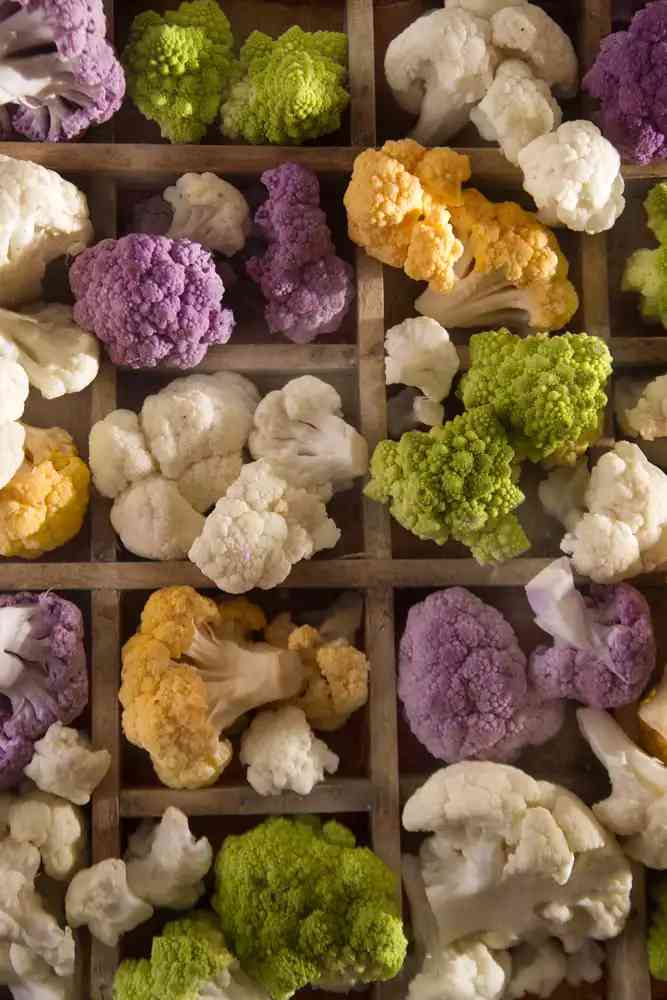
Ingredients
- 3.4 kg cauliflower
Instructions
- Break the head into florets by hand and only cut the stems that need it. Cauliflower shatters into crumbs under a knife, and the crumbs fall straight through the tray.
- Trim the thickest stalks down so no piece is more than 13 mm through. The stem is dense and wet and is always the last part of a floret to finish.
- Decide on the blanch now: three minutes in boiling water and straight into ice water keeps the cauliflower pale and stops the enzymes that turn it yellow in storage. Skip it and the batch still dries fine, it just goes grey and starts smelling of cabbage within a few months.
- Dry the florets properly on a towel if you blanched them. Water sitting in the crevices of a floret is the slowest water in the whole tray to leave.
- Spread the florets in one layer with the cut faces up, giving each a little room. Cauliflower barely shrinks compared with most vegetables, so a crowded tray stays crowded.
- Dehydrate at 57 °C for about 10 hours, turning the florets over once around the midpoint so the sides sitting on the mesh get their turn.
- They are done when a floret snaps clean and the stem end is as brittle as the top. Judge a cooled piece; the stem is the part that will still be leathery, and it is worth breaking one specifically to check.
- Store them in an airtight jar in the dark for a year if they were blanched and about six months if they were not. For powder, grind only what you will use in a couple of months, because cauliflower powder takes up moisture from the air and cakes hard.
Nutrition
| Per 100 g | Per 1 oz (28 g) | |
|---|---|---|
| Energy | 285 kcal | 81 kcal |
| Protein | 21.6 g | 6.1 g |
| Fat | 3.4 g | 1 g |
| saturated | 1.5 g | 0.4 g |
| Carbohydrate | 34.2 g | 9.7 g |
| sugars | 21.6 g | 6.1 g |
| Fibre | 22.8 g | 6.5 g |
| Sodium | 342 mg | 97 mg |
Estimated from the ingredients, for the finished dried product. Actual values vary with the produce you use and how far you dry it.


